Wallace Huo (霍建華)
⚡ One-Click Stalking (Explore in Chinese)
Biography
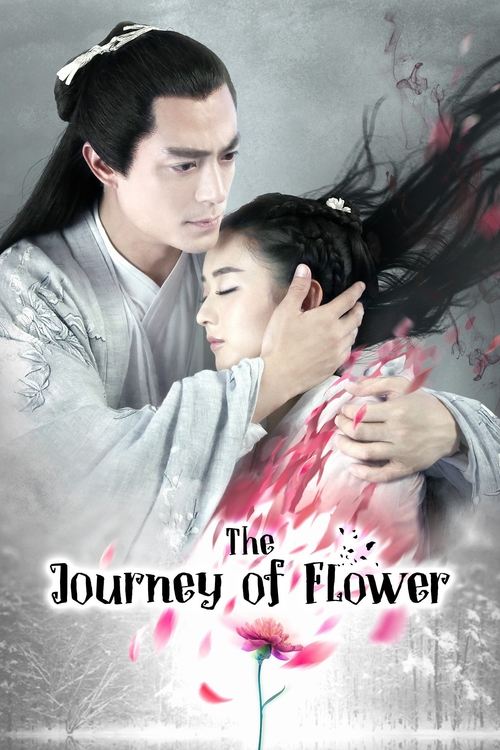
Wallace Huo is the ultimate “reluctant star” of Chinese entertainment — a man who built a career on raw talent and undeniable screen presence, yet never seemed to want the fame that came with it. Discovered almost by accident after serving in the military, he skyrocketed to fame in 2003 by filming seven idol dramas in a single year, then walked away from his established career in Taiwan to start over from scratch in mainland China. He became the definitive “ancient costume idol” of his generation — first as the ethereal Xu Changqing in Chinese Paladin 3, then as the ice-cold Bai Zihua in The Journey of Flower, a role that made him the top-ranked actor on China‘s 2015 celebrity power list. Yet throughout it all, he remained famously aloof: no social media accounts, no manufactured buzz, no interest in playing the fame game. He was, as fans called him, a “hermit among top stars” — an actor who reached the peak of popularity while actively retreating from the spotlight.
Breakthrough Role Huo’s career is defined by a series of breakthrough moments rather than a single role. He first gained attention in Taiwan as the melancholic music producer Zhong Xiaogang in the 2003 idol drama At Dolphin Bay (《海豚湾恋人》), a performance that turned him into a household name overnight. But his true leap to pan-Chinese stardom came in 2009 with Chinese Paladin 3 (《仙剑奇侠传三》), where he played Xu Changqing — a white-robed, sword-wielding Taoist priest bound by three lifetimes of tragic love. The role cemented his status as a “national ancient costume heartthrob” and earned him a place among the legendary “Four Most Handsome Men of Tianya” (天涯四美). Six years later, The Journey of Flower (《花千骨》) shattered viewing records, becoming the first Chinese drama to surpass 20 billion online views. His portrayal of the stoic, emotionally repressed Bai Zihua — the “National Immortal Lord” — pushed him to the absolute peak of his career. Alongside these iconic roles, Huo also earned critical praise for his performance in the wartime drama Battle of Changsha (《战长沙》) and achieved commercial success with the psychological thriller Love Me If You Dare (《他来了,请闭眼》), consistently ranking on the Forbes China Celebrity List from 2014 to 2019.
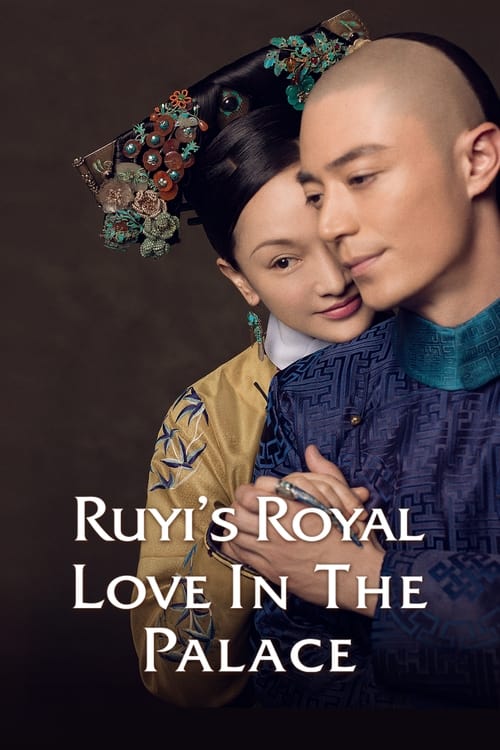
Public Perception Public perception of Wallace Huo is one of the most complex and contradictory stories in modern Chinese entertainment. For much of his career, he was adored as the “untouchable” idol — a man of striking looks, quiet discipline, and impeccable screen presence. Yet his decision to marry actress Ruby Lin in 2016 triggered a massive fan backlash, with many followers abandoning him overnight. His performance as the Emperor in Ruyi‘s Royal Love in the Palace (《如懿传》) drew widespread criticism, with audiences deriding his portrayal and blaming him for “ruining” the drama. For years, he seemed to vanish from public view — a former top star who had “disappeared”. But in recent years, Huo has staged a quiet and remarkable comeback. A simple birthday photo in 2025 — showing him in casual clothes, smiling warmly beside his wife — went viral, with viewers praising him for “de-oiling” his image and embracing a grounded, contented authenticity. In 2026, he returned to Taiwanese television for the first time in years, starring in the Netflix medical drama Miracle in the Emergency Room (《急诊室的奇迹》), and joined Liu Yifei in the highly anticipated urban drama The Story of Rose (《玫瑰故事》). Today, audiences see him not as the untouchable idol of old, but as something far more interesting: a man who walked away from the machine of fame on his own terms, weathered the storms of public opinion, and emerged — still working, still present — as a “vulnerable, old-school artist” who simply chose to live life his way.